
El Hanafai Mosque Foundation
El Hanafai Mosque dates back to 1750, during the Ottoman era. Builders created it for worshippers who followed the Hanafi school of thought. Later, the mosque shifted to the Maliki rite, which became the dominant tradition in the Maghreb. Today, it stands as an important historical monument in Blida’s old quarter, close to the lively Souika market. Locals value it as both a place of prayer and a symbol of the city’s architectural heritage.
Location & Structure
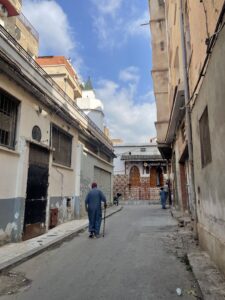
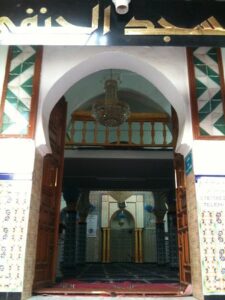
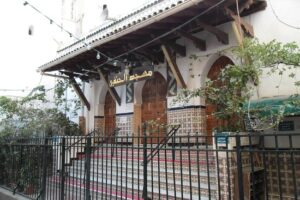
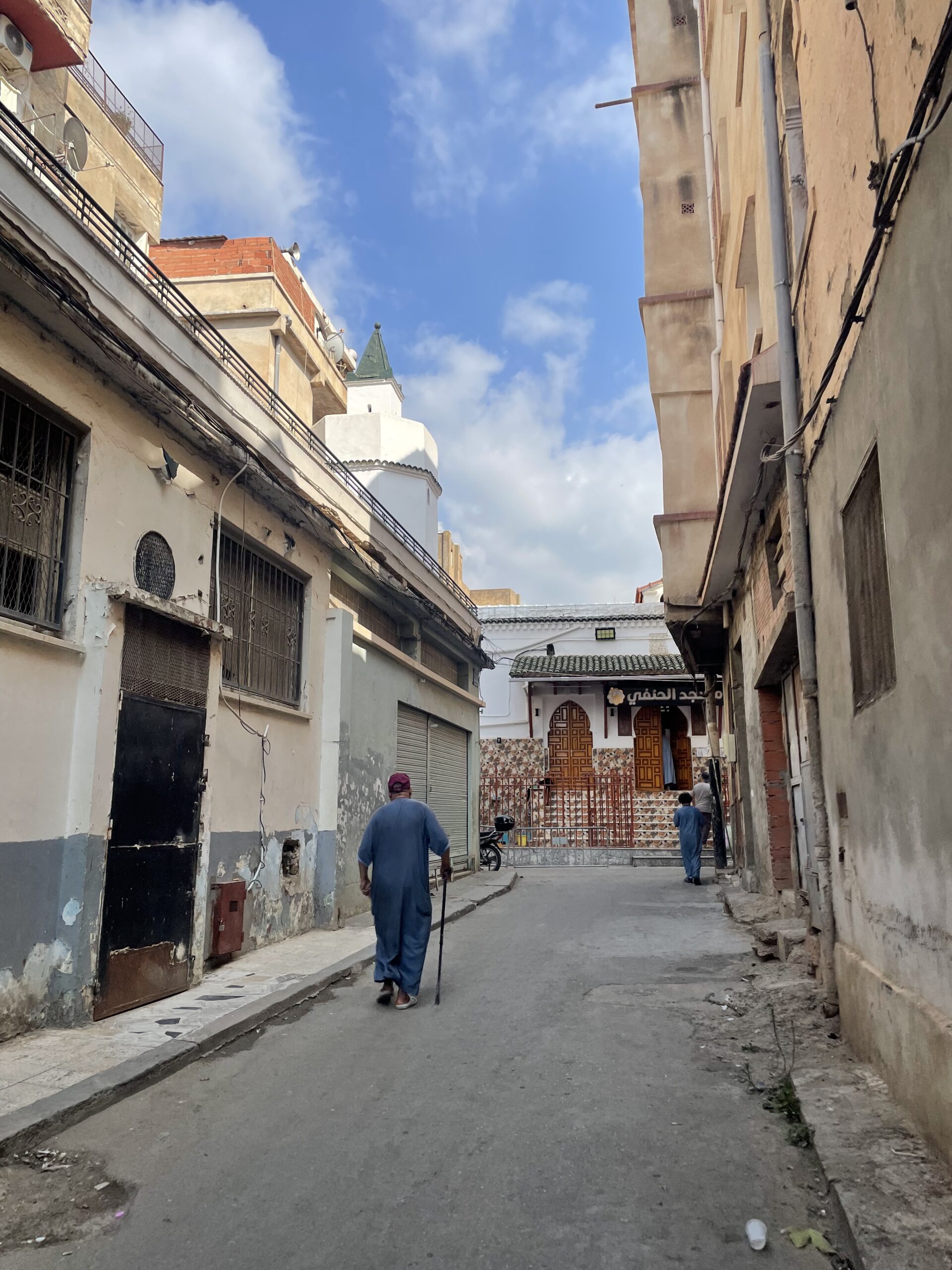
The mosque rises in the heart of historic Blida. Its west façade faces Rezouq-Zaimi Street, while its other sides align with narrow traditional streets and a few colonial-era buildings. The overall design appears simple yet balanced. It has one main entrance, and two side windows were later turned into doors to welcome more worshippers during busy times.
Architectural Highlights
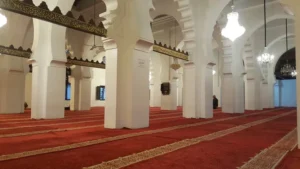
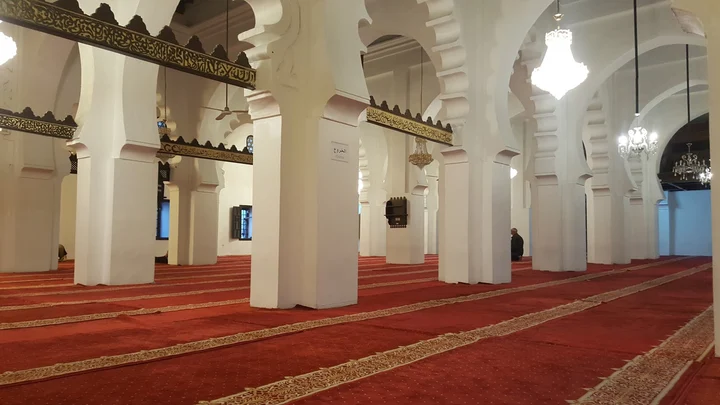
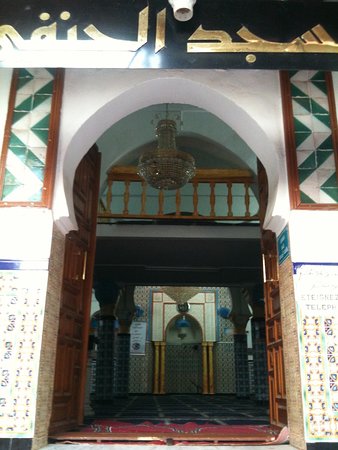
Inside, the prayer hall rests on four aisles, divided by three rows of five columns. These columns follow the Hammadite style, seen in several old North African mosques. The arches use the classic broken arch (العقد المنكسر), common in Algerian Islamic architecture from cities like Ténès, Constantine, و Tlemcen. Most decorative elements stay modest. However, the green-and-white zellige above the original entrance stands out. It carries Turkish inscriptions dated 1828, which honor the restoration ordered by Dey Hussein Pasha. The minaret is octagonal, about 35 meters tall, and closely resembles the minaret of Saffir Mosque in Algiers.
Prayer Facilities & Interior
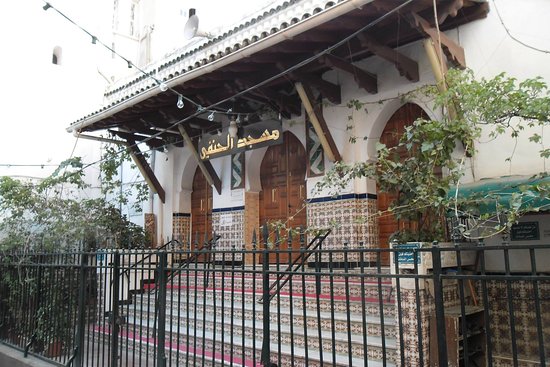
A marble fountain sits at the center of the ablution area. From there, worshippers climb a short set of stairs that leads to the main prayer hall. The space can host around 400 people. Its layout preserves the spirit of Ottoman and Algerian architecture, creating a calm setting for prayer while showing how styles and practices evolved through the centuries.
Preservation & Restoration
El Hanafai Mosque has seen several restoration projects. The most recent work focused on the roof, the ablution zone, and other essential parts of the building. The project lasted about 45 days and involved cultural and religious authorities, who aimed to protect the mosque’s original character. Earlier restorations followed the 1825 earthquake, which caused heavy damage. Some of those repairs did not fully respect the historical design, a concern still noted by heritage specialists today.