
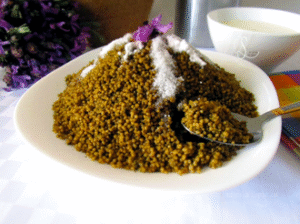
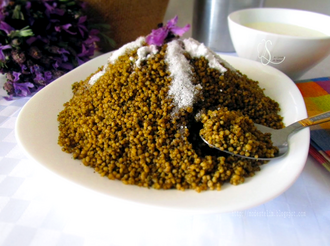
Information About the Dish
Couscous El-Hamama is one of Blida’s most symbolic traditional dishes. It is known as the “Lavender Couscous” because it uses fresh wild lavender, which gives it a unique aroma. This recipe is not only a meal but also a part of Blida’s heritage and identity. It carries memory, healing, and tradition in every step of its preparation.
The Mitidja plain with the Atlas Mountains is the original home of this kind of couscous. Families made this couscous with care and attention as many consider it a spiritual dish. The couscous has a mild and sweet herbal taste rather than the savory couscous which is the norm across Algeria.
Ingredients needed for Couscous el-Hamama
- Semolina
- Fresh wild lavender flowers
- Water
- A small amount of sugar
- Leben or buttermilk
Way of Preparing Couscous el-Hamama
The heart of this recipe is the wild lavender, which must be fresh and fragrant. The flowers are crushed by hand to release their natural juice, and this juice is mixed with a little water. The liquid is then used to moisten the semolina slowly. Each movement is gentle to keep the grains light.
The semolina is rolled by hand until it forms even, soft grains. It is then steamed in the traditional couscous method, which keeps the texture airy. This slow process was practiced for generations and reflects the calm rhythm of old Blidian kitchens. Once ready, the couscous is served warm and lightly sweetened.
Couscous El-Hammama is always paired with leben. The buttermilk balances the lavender’s light bitterness and creates a delicate final taste. The result is a dish that feels soothing, simple, and deeply comforting.
Medicinal Value of Lavender
Lavender has long been known in Blida as a healing plant. It helps digestion and reduces discomfort after heavy meals. It calms the nervous system and supports relaxation. It also acts as a natural purifier, which makes the dish both nourishing and gentle for the body. Through this recipe, families preserved culinary and medicinal traditions at the same time.