
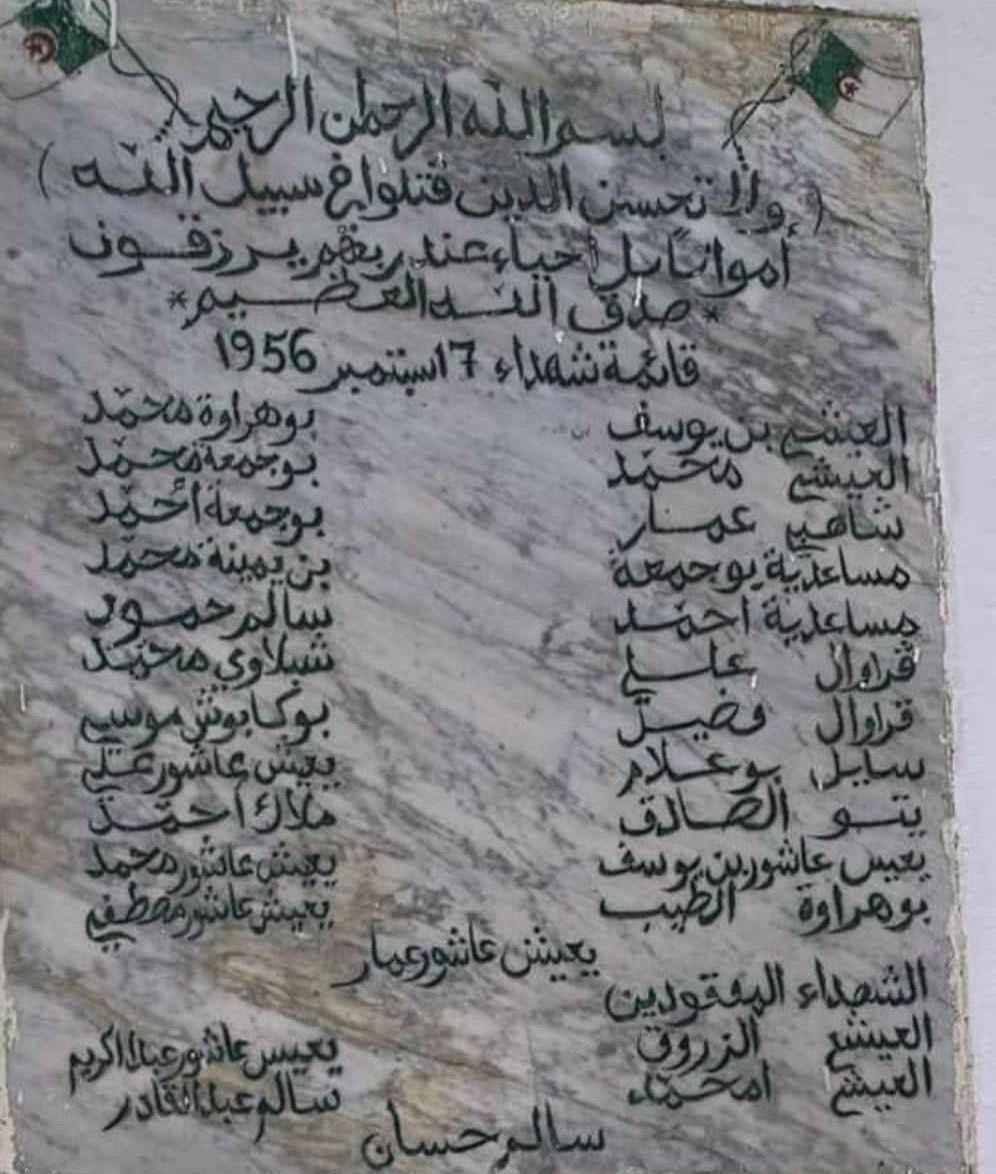
The Ouled Yaïch massacre occurred on 17 September 1956 in Blida. It exposed the brutality of colonial forces against unarmed civilians and proved that violence could not stop the Algerian Revolution.
That night, the ALN (Liberation Army Forces) ambushed a French unit and killed around forty soldiers. In retaliation, French forces carried out large-scale attacks across the area. They targeted people, livestock, and homes without distinction. Consequently, Ouled Yaïch, a small but strategic village, became the center of the assault. The village also hosted meetings of key leaders, including Mohamed Boudiaf.
By 1956, the colonial army had already tightened its grip on the region. It enforced a harsh blockade and punished anyone suspected of aiding the ALN. After the ambush, troops from Blida, Oued El Alleug, Soumaâ, and Boufarik joined the units in Ouled Yaïch. Soldiers killed more than 31 civilians, slaughtered animals, and bombed the village for a full week.
These events occurred under the government of Guy Mollet and remain a stain in French history. Nevertheless, the massacre strengthened the population’s resolve. It increased support for the ALN and expanded resistance across Mitidja and the surrounding regions. Furthermore, it inspired new revolutionary actions in neighboring areas.