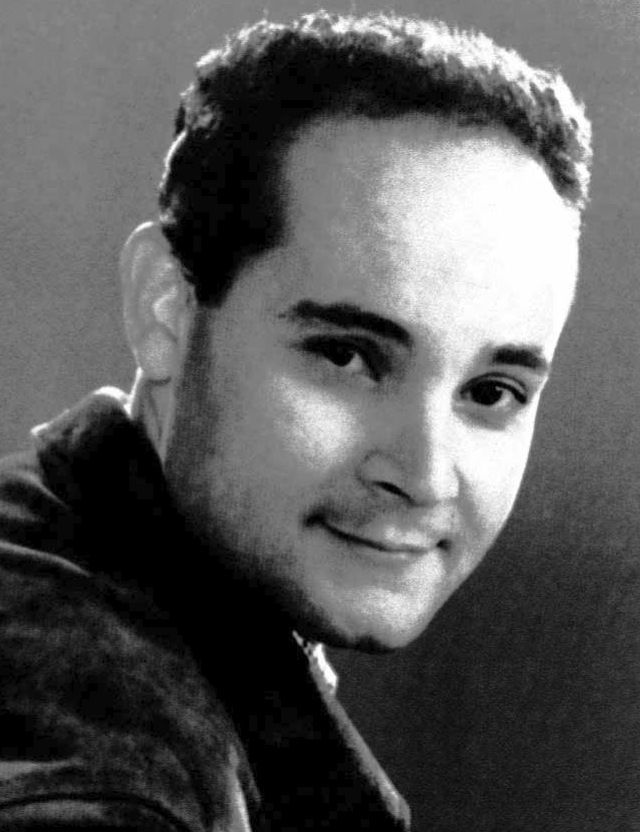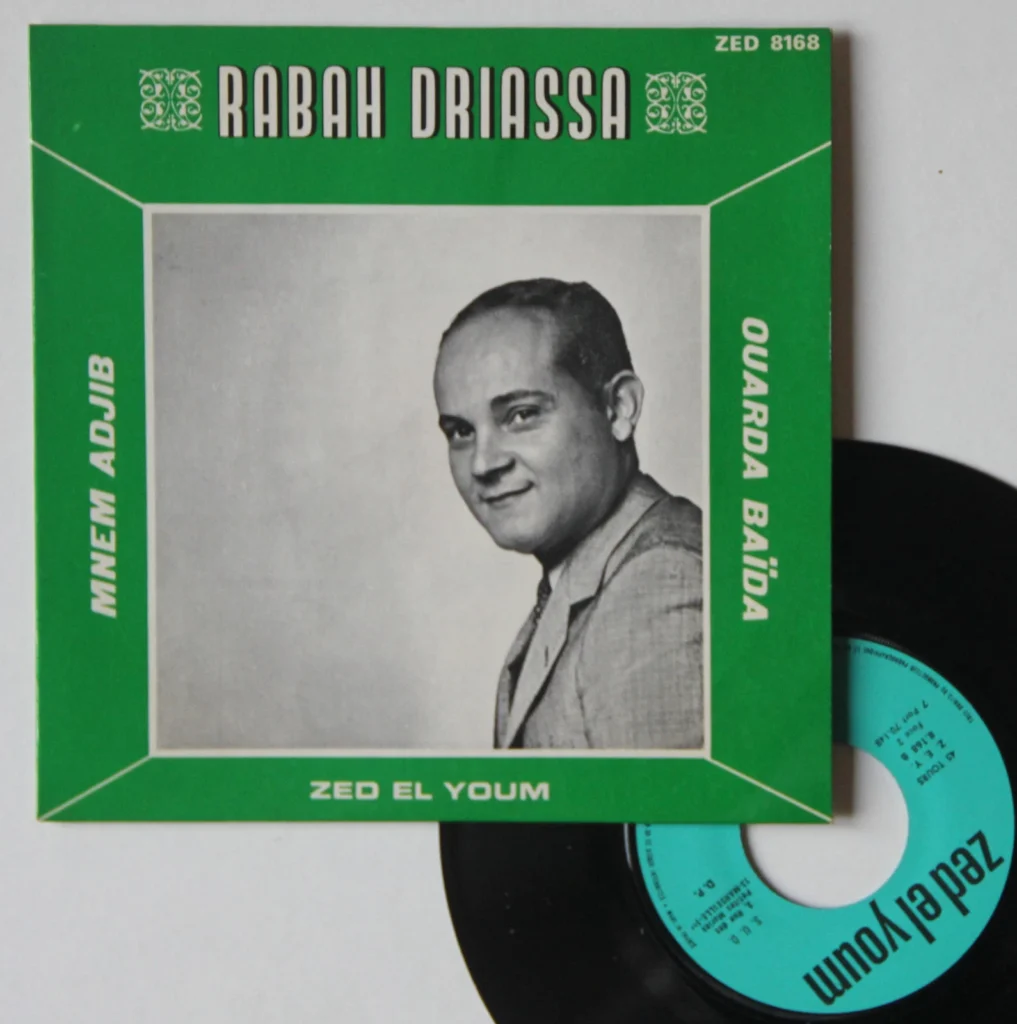
Rabah Driassa was an Algerian painter, composer, and above all a singer and performer of popular, hawzi, و sahraoui music. He was born in Blida in 1934. He became well known between the 1960s and 1980s for many folk songs that remain masterpieces of Algerian music, such as Yahya Wlad Bladi, Hizia, Nejma Katbia, El Goumri, El Aouama, and many others.
In the 1990s, his son Abdou Driassa began his own musical career, mainly performing new versions of his father’s songs. The two often sang together as a duo.
Rabah Driassa was born in Blida in 19 August 1934. He did not start with music right away; his first artistic passion was painting, especially miniature painting, which he learned on his own, inspired by Mohamed Racim. He exhibited his works in Blida and Algiers and received the Jules Ferry Prize at the Salon of Algerian and Orientalist Artists in Paris and Metz, during the twinning of Blida and Metz.
He became interested in music in 1953, first writing songs for many well-known singers of the time. Later, he decided to perform his own lyrics on a popular radio show written and hosted by M. E. Hachelaf, titled Men Koul Fen Chouia (“A Little Bit of Every Art”). His talent was quickly recognized by major figures of Algerian music, such as Mustapha Skandrani, Abderrahmane Aziz, and Mustapha Kechkoul, who supported him in his early career.
His success came quickly. He composed the music for his own songs and created a new style by blending different genres such as Alaoui و Sahraoui. His innovative rhythms and socially aware lyrics won over the public, and he went on to record several successful 45 rpm singles with major record labels such as Pathé, Tepaz, and Philips.
After Algeria’s independence, he incorporated patriotic and romantic themes into his music. He took part in many tours organized by the Algerian community in Europe to celebrate independence and was soon recognized as one of the ambassadors of Algerian song. He also represented Algeria at cultural events in countries such as Iraq, Egypt, Syria, Kuwait, Saudi Arabia, the United Arab Emirates, Lebanon, Morocco, Libya, and Tunisia. At the Carthage International Festival, his song Nedjma Kotbia was a great success. Known for his moral values, poetic sense, professionalism, and kindness, he remains one of the most respected singer-songwriters of modern Algeria.
His number of hit songs is countless. In 1975, the director of L’Olympia in Paris invited him to open a new concert series dedicated to Arab artists for the first time. During his performance, he presented a collection of new songs that confirmed his reputation as a skilled and original musician, warmly received by the audience.
Later, R. Blouziane, director of Atlas Editions, added his songs to the company’s catalog. The new album featured several of his major works, including Ya Abdelkader (about Emir Abdelkader), Hizb Ethouar, Quesset Sidna Youcef, and a tribute to the poet Sidi Lakhdar Ben Khlouf, titled Quasidet Ya Ras Bnadem. Driassa enriched this song with his own lyrics and musical arrangements. The album offered a broad overview of his work as a composer and poet.
He lost his mother at the age of 12 and his father three years later, taking on the responsibility of raising his five younger brothers. To support them, he worked as a glass engraver while continuing to paint. In 1952, he succeeded in exhibiting his artwork both in Algeria and in France.
From 1953, he participated in the public radio show Men Koul Fen Chouia and in concerts organized by Algerian Radio at the Ibn Khaldoun Hall. His remarkable success earned him the nickname “The Nightingale of Algeria.”