Early Life
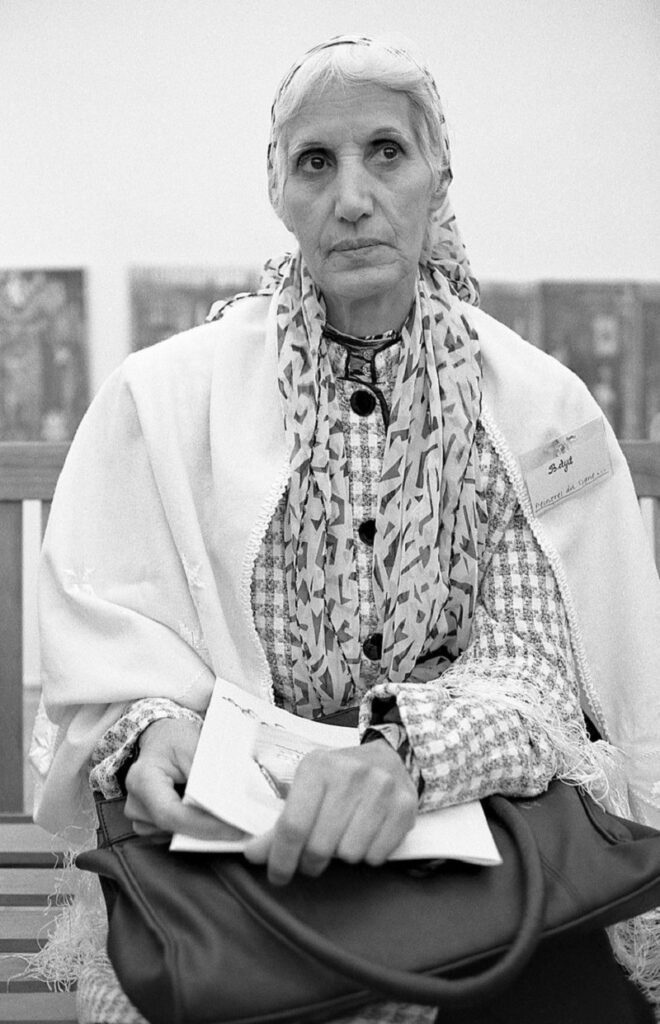
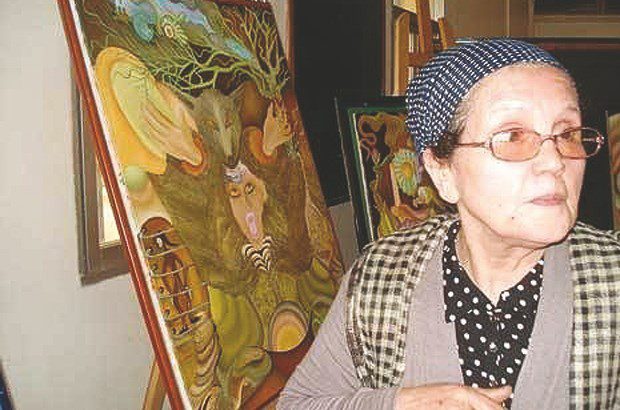
Baya Mahieddine, born Fatma Haddad (later Mahieddine), came into the world on December 12, 1931, in Bordj El Kiffan (then Fort-de-l’Eau, near Algiers). She passed away on November 9, 1998, in Blida. She was an Algerian painter who signed all her works simply as “Baya.”
Orphaned early, she was raised by her grandmother. She helped with farm work for colonial settlers, mainly in horticulture. In 1943, Marguerite Caminat, the sister of the farm owner, took her into her home in Algiers. There, Baya assisted with household chores and became enchanted by the flowers and birds in the house.
Artistic Beginnings
Baya began modeling figures and fantastic animals from clay. She was encouraged to paint gouaches. The sculptor Jean Peyrissac showed her work to Aimé Maeght, who was visiting Algiers in 1943.
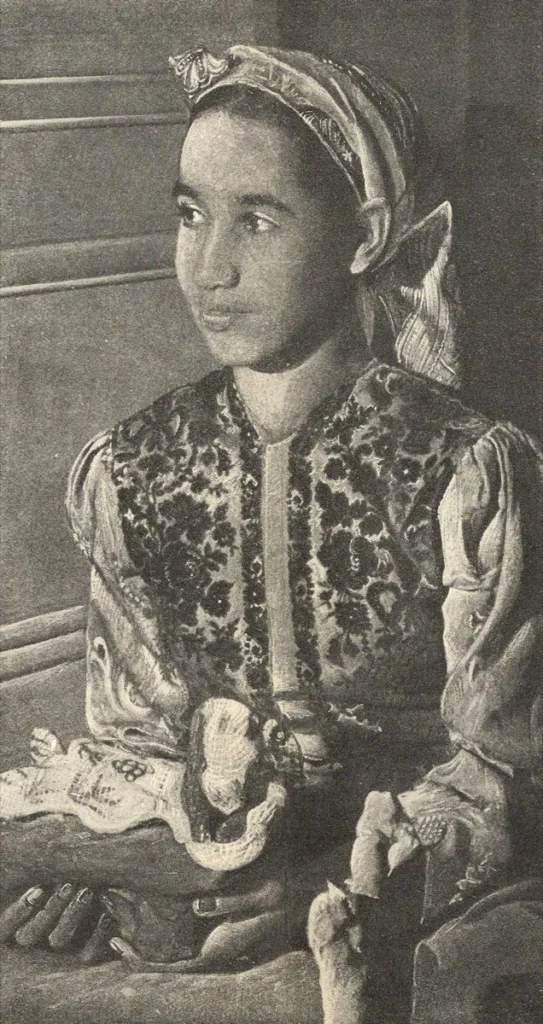
In 1947, Maeght organized an exhibition at his Paris gallery. André Breton wrote the catalog’s preface. The exhibition was a great success. Vogue published a photo of Baya, then sixteen, along with an article by Edmonde Charles-Roux.
Paris and Influences
Baya discovered Paris and met painter Georges Braque. In 1949, she created ceramic sculptures in Vallauris at the Madoura workshop, where she also met Picasso.
Marriage and Hiatus
In 1953, Baya was returned to her guardian, who married her off as his second wife to the Arabo-Andalusian musician El Hadj Mahfoud Mahieddine, about thirty years her senior. François Pouillon wrote, “After Cinderella’s unreal ball,” Baya spent the next ten years unable to continue her artistic work.
Return to Painting
In 1963, she participated in the Peintres algériens (Algerian Painters) exhibition for the November 1st celebrations, prefaced by Jean Sénac. The Museum of Algiers acquired and exhibited her earlier works. Encouraged by the museum’s curator Mireille de Maisonseul and Jean de Maisonseul, she resumed painting. She produced large gouaches on paper that were regularly shown in Algeria (Algiers, Tizi Ouzou, Annaba), France (Paris, Marseille), Belgium (Brussels), and across the Arab world. Several works are part of the Collection de l’Art Brut in Lausanne.
Artistic Style
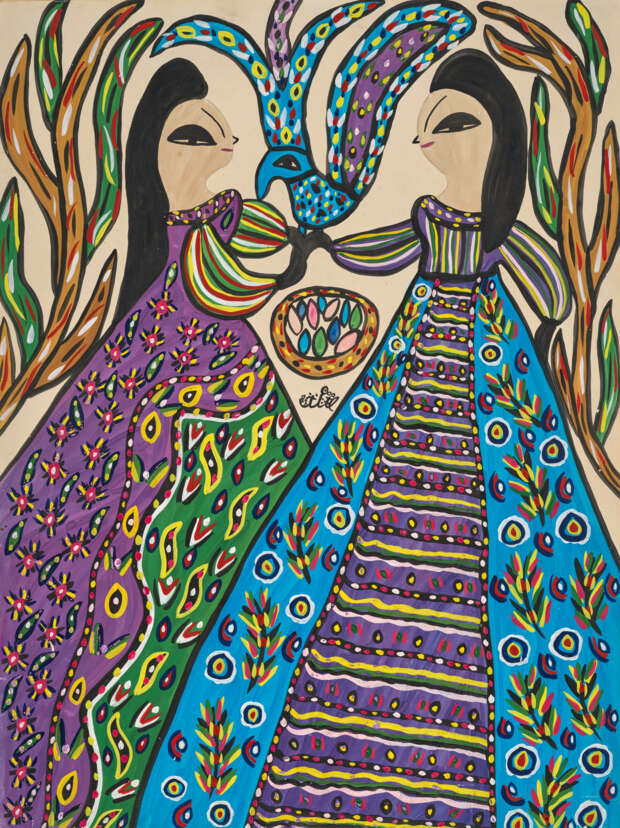
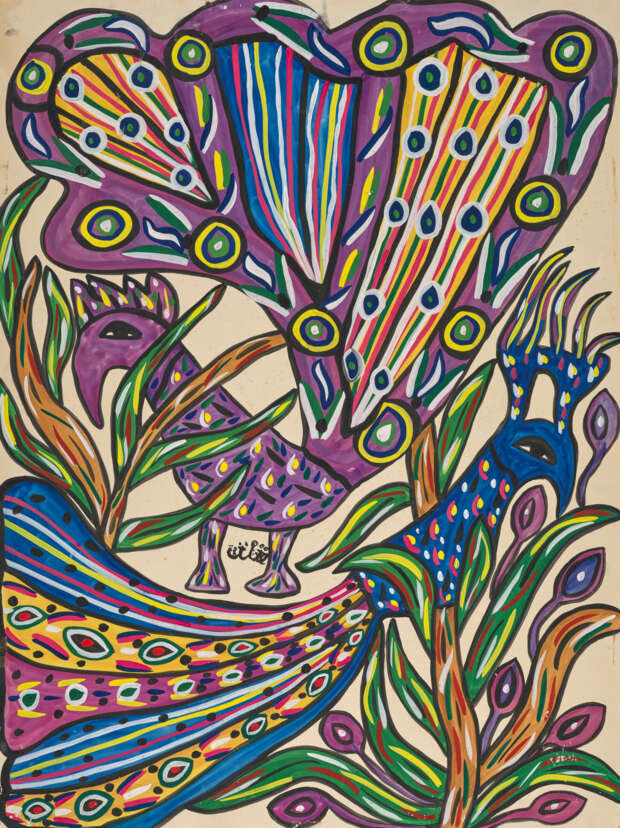
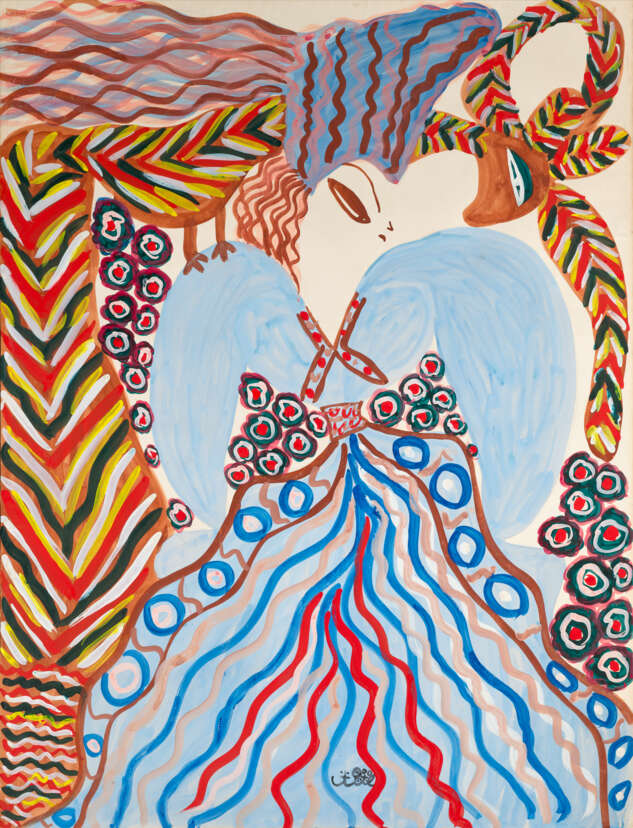
Baya is often grouped with Aksouh, Benanteur, Guermaz, Issiakhem, Bel Bahar, Khadda, and Mesli, artists of the “1930 generation” who founded modern Algerian painting. Her gouaches feature Indian pinks, turquoise blues, deep emeralds, and purples. A refined line defines the silhouettes and headpieces of her “High Ladies,” the enigmatic Mother, and decorative motifs on dresses, belts, and scarves.
Her compositions balance spaces and tones, with arabesques forming a self-contained, unreal world. She built a closed, exclusively feminine universe, both secluded and sovereign.
Subjects and Motifs
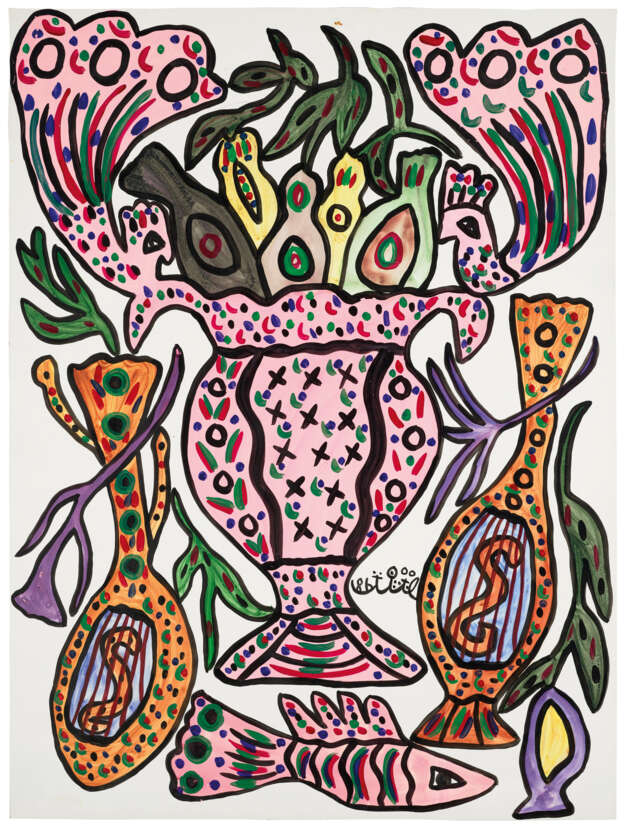
Objects like vases, jugs, bouquets, and fruits appear without shadows, layered on the same plane. Two decades later, overflowing fruit bowls and dishes populate her paintings, often accompanied by lamps, lanterns, and musical instruments such as viols, violins, zithers, mandoras, lutes, lyres, and harps.
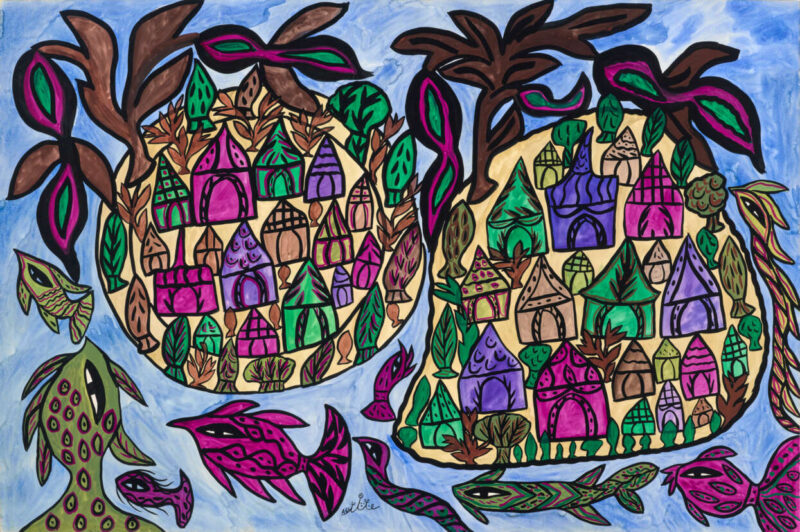
When her gouaches depict landscapes, they show islands surrounded by fish, with densely packed huts and trees teeming with birds. The vibrant forms and colors evoke, as novelist Jean Pélégri noted, “a time before the appearance of man, when things and creatures were still uncertain and intermingled, when trees grew under the waters, and when fish, before becoming what they are, lived in the roots of plants and climbed up their stems.”
Legacy
Baya’s work remains celebrated for its imagination, color, and the creation of a unique feminine universe.